
The Grapes of Wisdom: A Visit to Racines, Bonnieux
Tucked into the sun-drenched hilltop village of Bonnieux, in the heart of the Luberon, Racines is far more than a wine shop. It is a place where the soul of Provençal winemaking is carefully preserved and shared —bottle by bottle, story by story. Behind the counter, Pierre has built something rare: a curated selection that reflects not just great terroir, but a genuine philosophy about how wine should be discovered and enjoyed.
At Excursus, we believe that the most memorable experiences in the South of France are often the most intimate ones —a conversation with a passionate artisan, an unexpected find on a quiet village street, the kind of encounter no app can plan for you. Our visit to Racines was exactly that. We sat down with Pierre to talk about natural wines, the producers he champions and what it means to run an independent wine shop in one of Provence’ most iconic villages.
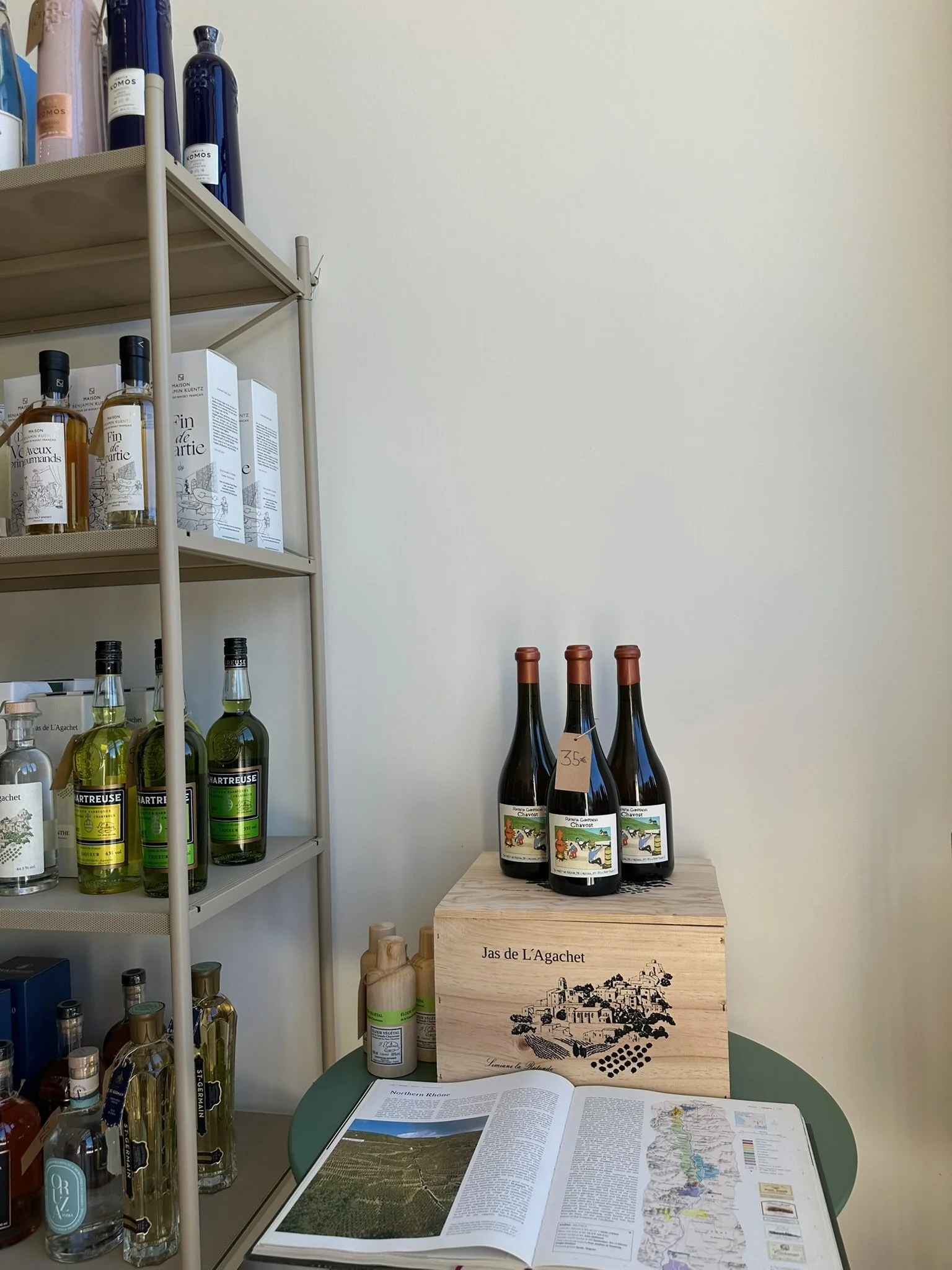
Could you share the story behind Racines? What was your vision when you opened this wine cellar in one of the Luberon’ most iconic villages?
Racines was born from a desire to reconnect wine with its origines —its “"roots”, both literally and philosophically. When we opened the shop, our vision was to create a space that celebrates independent winemakers who work with respect for the land, ofter organically or biodynamically. In a region as inspiring as the Luberon, it felt essential to highlight wines that reflect authenticity rather than standardization. Racines is not just a shop: it’s a place of discovery, where each bottle tells a story of people, soil and craftsmanship.
How does the local terroir influences the selection of wines you curate for Racines?
The Luberon’ terroir is shaped by altitude, limestone soils and the meeting of Mediterranean and alpine influences. This balance of freshness and sun is something we look for in our selection —not only locally, but across France. Even when we source wines from Burgundy or Champagne, we seek that same sense of precision, energy and respect for terroir.
For our international guests who might only know Provence for its rosé: how would you describe the diversity of wines found in Luberon and Ventoux appellations?
Rosé is just the entry point. The Luberon and Ventoux appellations, which are subregions of the Rhône Valley, offer remarkable diversity and a wide variety of different grapes. You’ll find whites that range from sharp and mineral driven to more round, complex and barrel aged cuvées. The reds are equally compelling: from light and fresh to more structured and complex, with garrigue notes and a surprising elegance thanks to altitude.
How do you tailor your in-residence wine tastings for guests who want an exclusive, intimate experience?
We propose a multitude of packages and custom experiences. Our most popular tasting consists of a Champagne, a Burgundy, a Châteauneuf-du-Pape and a dessert wine. We can also provide a cheese and charcuterie pairing.
What is the most surprising thing that guests learn during one of your in-residence wine tastings?
Many guests are surprised about how much terroir matters —how clearly you can taste differences in soil, climate and philosophy from one bottle to another when the terroir is presented and simply explained.
If you had to pick the perfect wines for a week-long summer stay in a villa, which bottles would you recommend?
I would build a small, versatile selection: I would start with a grower Champagne for the apéritif or those spontaneous moments worth celebrating such as the beautiful sunsets we get in the valley. Followed by a crisp white from the Luberon, a more textured and complex white and red from Burgundy for dinners, or a structured Châteauneuf-du-Pape to accompany some grilled meat. And of course, a refined rosé for long afternoons by the pool. The idea is to have wines that adapt to the rhythm of the day.
Which local food would you pair with a Mediterranean dinner prepared by a private chef?
I would think of dishes like grilled fish, roasted vegetables and herbs from the garden —simple, seasonal and aromatic. A fresh white with good acidity works beautifully, or a light red served slightly chilled. The key is harmony: wines that enhance the flavors without overpowering them, allowing both the ingredients and the wines to shine.
We are seeing a shift toward organic and biodynamic viticulture with our guests: how is the Provence wine scene evolving in 2026 to meet these expectations?
The shift is very real. More and more winemakers in Provence are moving toward organic and biodynamic practices, not just as a trend, but as a long-term commitment to soil health and authenticity.
What is your favorite hidden spot in the Luberon to enjoy a glass of wine at sunset?
There are many, but I love finding a quiet viewpoint overlooking to Northern Luberon, where you can see the light changing on the hills as the day ends. Somewhere simple and unspoiled —where the landscape does the talking. With the right bottle and good company, that’s all you need.
How would you describe the Provençal way of life?
Time seems to run differently here. It’s about balance and attention to the present moment. There’s a strong connection to nature, to food, to rhythm —taking time to enjoy a meal, a conversation, a glass of wine. It’s not about rushing or accumulating, but about appreciating what’s in front of you.
What is the best piece of advice you can give to a traveler looking to start their own Provençal wine collection?
Start with curiosity, not prestige. Choose bottles that move you, that you’ve discovered during your travels or tastings. Don’t be afraid of lesser-known appellations or small producers —those are often the most memorable wines. And most importantly, build a collection meant to be enjoyed, not just stored. Wine is about sharing and experience above all.
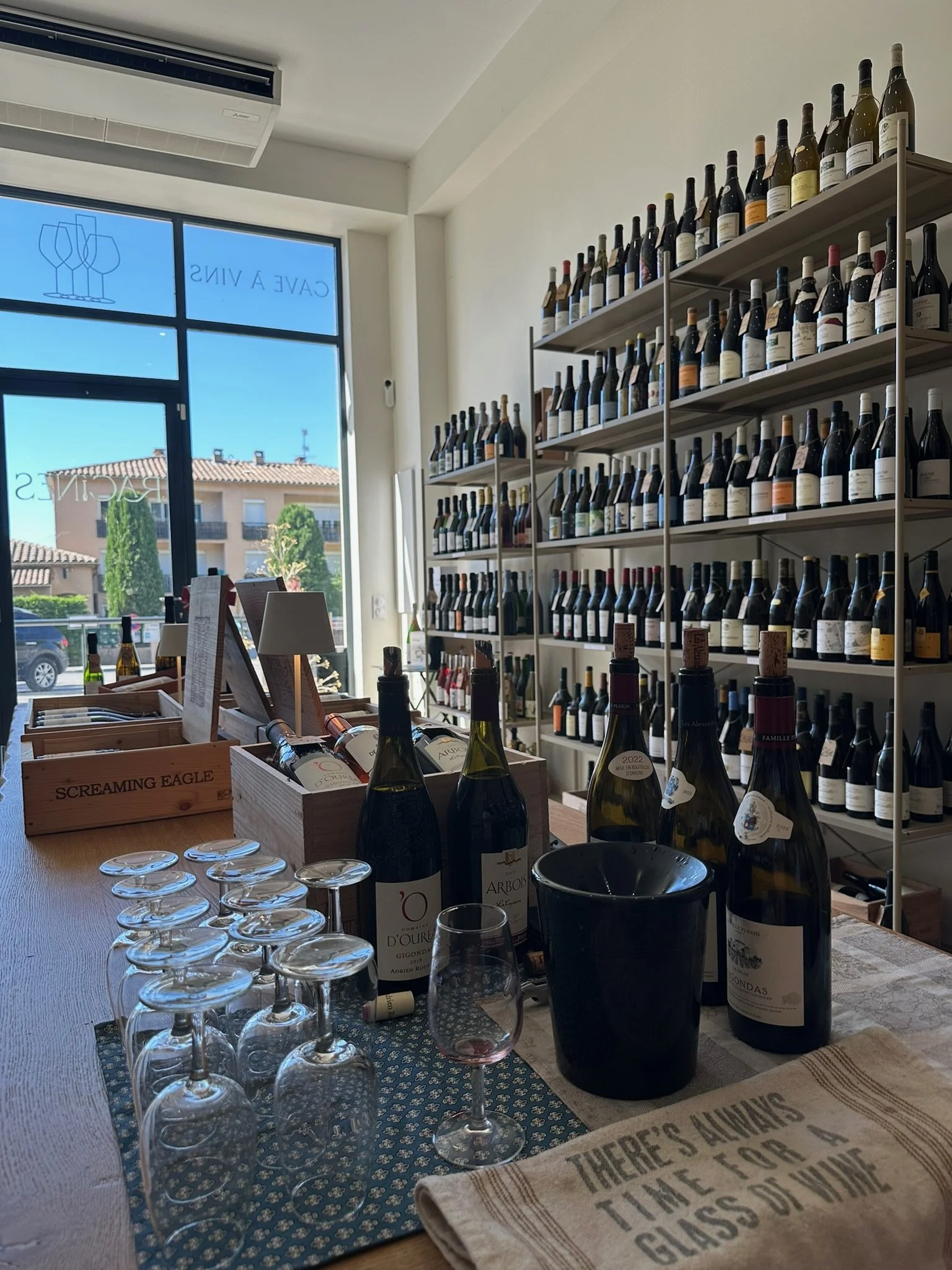
Whether you are spending a few days in the Luberon or simply passing through Bonnieux on a Sunday morning drive, Racines deserves a stop —and Pierre deserves your curiosity. A conversation with him is as rewarding as the bottles he selects.
Discovering places like Racines is at the heart of what Excursus does: connecting our clients with the people, flavors and hidden corners that make Provence truly extraordinary. If you would like us to weave a visit to Bonnieux —and a few exceptional wine discoveries— into your next stay in the South of France, we would be delighted to make it happen.